
Introduction
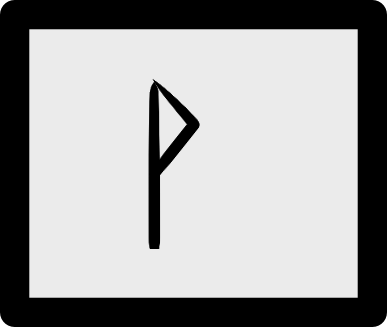
The Wynn (Wunjo) rune is associated with cohesion, alignment, and the successful integration of elements within early Germanic societies. Its meaning is grounded in outcomes that function as intended, where structure, effort, and relationship combine to produce a stable result.
In historical contexts, Wynn appears within inscriptions as part of a functional writing system, contributing to meaning through its placement within words and phrases rather than acting as an isolated symbol.
Wynn (Wunjo) in Historical Context
The concept reflected by Wynn relates to the state in which systems, relationships, or efforts come into balance and operate effectively. In the early medieval world, this might be seen in the stability of a household, the reliability of agreements, or the successful coordination of work and resources.
Rather than representing abstract happiness, Wynn reflects a condition where things are functioning as they should, where structure and intent have produced a workable and enduring outcome.
Use in Runic Inscriptions
Wynn appears within runic inscriptions as part of a structured writing system, where its role is determined by its position within names and words. Like other runes, it contributes to meaning through context and sequence rather than functioning independently.
Surviving material suggests that runic writing prioritised clarity and intent, with each character forming part of a deliberate and economical expression.
Wynn (Wunjo) in Modern Design
When incorporated into engraved rune rings, Wynn reflects cohesion and balance within a design. Its form lends itself to compositions that emphasise proportion and the relationship between elements, supporting a sense of structural completeness rather than decorative excess.
Each piece is developed from research into inscriptions and artefacts, then refined into a form suitable for precision engraving and everyday wear.