
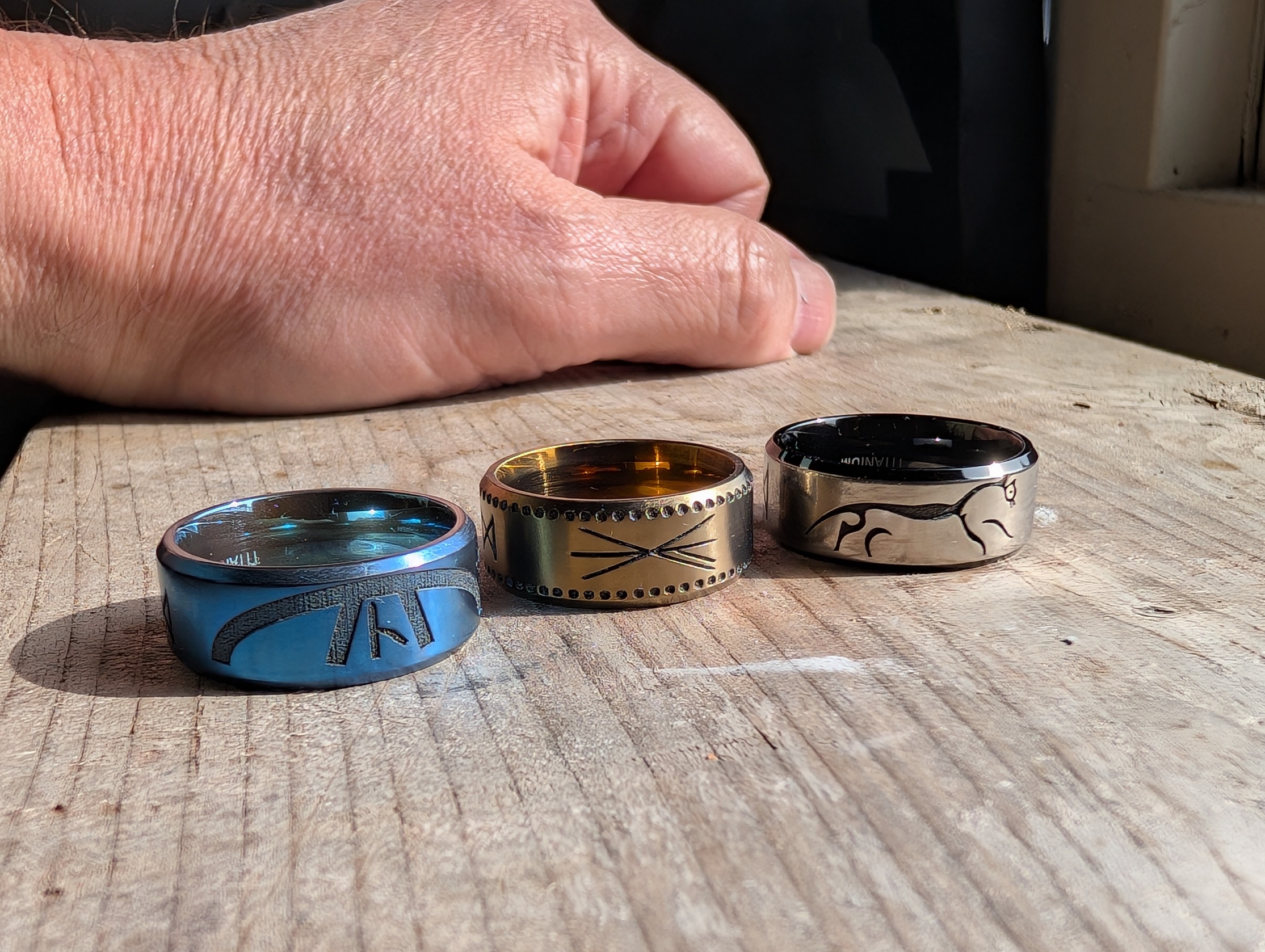
The Sons of Wayland
The name The Sons of Wayland draws on the legendary smith Wayland, master craftsman of early northern tradition. In Anglo-Saxon and Norse lore, Wayland was more than a maker of objects. He was a figure of endurance, skill and reputation — a name that survived because his work did.
In England, the ancient site now known as Wayland’s Smithy stands along the Ridgeway. Long before the legend, it was a burial mound raised in the Neolithic age. Later generations gave it a name and a story. They imagined the smith working there in secret, forging through the night. Stone endured. Meaning accumulated. Craft and memory became inseparable.
To stand as “sons” of Wayland is not a claim of blood, but of allegiance. It is a commitment to skill, intention and the belief that objects can carry weight beyond ornament. In oath-bound societies, a man’s word bound him, protection was sought and given, and reputation was earned through deeds.
Each ring is engraved in that spirit — rooted in early Anglo-Scandinavian symbolism and informed by runic tradition. These are not pieces made for fashion alone, but objects shaped to endure.
Three pillars of an oath-bound society.
Word. Warding. Reputation.
Oath. Protection. Deeds.
In the early medieval North, identity was not abstract. It was lived, spoken and proven. Society was structured not only by kinship and law, but by expectation — what a person owed, what they defended, and what they became known for.
The work of The Sons of Wayland rests on three interwoven principles drawn from that world: Word. Warding. Reputation.
Word
In an oath-bound society, the spoken word carried weight. Agreements were sworn, alliances declared, loyalty affirmed publicly and remembered.
An oath was not symbolic language. It was binding. To break one risked honour, standing and trust. Law codes across Anglo-Saxon and Norse communities reflect this deeply rooted belief that speech had consequence.
Runes themselves belong to this tradition. They are not merely characters, but carriers of intention. To engrave words into metal is to give them permanence — to fix declaration into form.
The first pillar is therefore the Word: what is spoken, what is promised, what is meant.
Warding
Protection was both practical and symbolic.
Weapons defended the body. Law defended standing. Symbols defended the unseen.
Across the Anglo-Scandinavian world, inscriptions and motifs were used as markers of protection and boundary. Whether invoking divine favour, ancestral strength or simple intention, such marks expressed the human desire to guard what mattered.
Warding is not superstition. It is the recognition that objects can hold meaning beyond ornament. A ring, worn daily, can serve as reminder, shield, anchor.
The second pillar is Warding: the instinct to protect, to preserve, to stand firm.
Reputation
In a world without digital record or written archive for most, reputation was memory carried by others. It was shaped through conduct, loyalty, courage and consistency.
Deeds mattered. So did restraint. A name endured only if behaviour sustained it.
Reputation could not be purchased. It was forged slowly and tested often.
The third pillar is Reputation: what remains when words and actions are weighed.
The Whole
These three principles are not separate. Word shapes action. Warding protects what is valued. Reputation grows from both.
Each engraved piece is shaped with this understanding — that objects can hold intention, reflect belief and endure beyond the moment of their making.
The Three Pillars are not a slogan. They are a framework drawn from a culture where identity was carried in both conduct and craft.
Each piece is forged with intention, rooted in runic symbolism and made to endure.
Wayland Smithy, Oxfordshire, England
