
Introduction
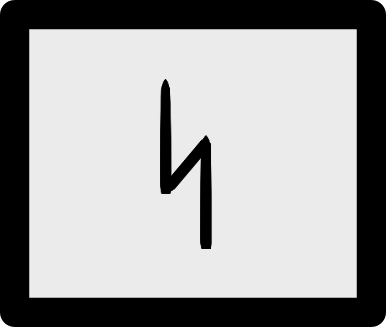
The Sigel (Sowilo) rune is associated with direction, energy, and sustained forward movement within early Germanic societies. Its meaning is grounded in the progression of systems over time, where continuity and momentum are maintained through consistent action.
In historical contexts, Sigel appears within inscriptions as part of a functional writing system, contributing to meaning through its placement within words and phrases rather than acting as an isolated symbol.
Sigel (Sowilo) in Historical Context
The name of the rune is linked to the sun, understood not as a symbol of abstraction, but as a constant and observable force. In the early medieval world, the sun provided light, marked time, and established direction, shaping daily activity and seasonal patterns.
This regular and predictable movement reflects the role of Sigel, where energy is not sudden or chaotic, but continuous and structured. The rune represents forward progression that is sustained over time rather than achieved through isolated effort.
Use in Runic Inscriptions
Sigel appears within runic inscriptions as part of a structured writing system, where its role is determined by its position within names and words. Like other runes, it contributes to meaning through context and sequence rather than functioning independently.
Surviving material suggests that runic writing prioritised clarity and intent, with each character forming part of a deliberate and economical expression.
Sigel (Sowilo) in Modern Design
When incorporated into engraved rune rings, Sigel reflects direction and continuity, expressed through clear and deliberate forms. Its structure lends itself to designs that emphasise flow and progression, reinforcing the idea of sustained movement rather than abrupt change.
Each piece is developed from research into inscriptions and artefacts, then refined into a form suitable for precision engraving and everyday wear.