
Introduction
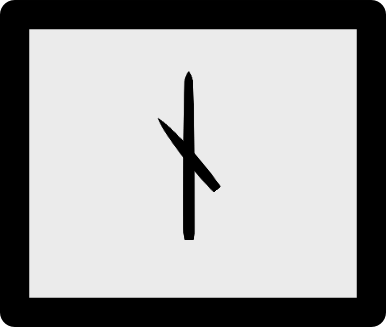
The Nyd (Nauthiz) rune is associated with constraint, necessity, and the presence of limitation within early Germanic societies. Its meaning is grounded in conditions where options are restricted and action is shaped by circumstance rather than preference.
In historical contexts, Nyd appears within inscriptions as part of a functional writing system, contributing to meaning through its placement within words and phrases rather than acting as an isolated symbol.
Nyd (Nauthiz) in Historical Context
The name of the rune is linked to need or necessity, reflecting situations where resources, time, or conditions impose limits on what can be done. In the early medieval world, such constraints were a constant factor, influencing survival, labour, and decision-making.
Necessity was not abstract, but immediate and practical, requiring adaptation and discipline. The Nyd rune reflects this understanding of pressure as something that defines action, forcing choices within a limited range of possibilities.
Use in Runic Inscriptions
Nyd appears within runic inscriptions as part of a structured writing system, where its role is determined by its position within names and words. Like other runes, it contributes to meaning through context and sequence rather than functioning independently.
Surviving material suggests that runic writing prioritised clarity and intent, with each character forming part of a deliberate and economical expression.
Nyd (Nauthiz) in Modern Design
When incorporated into engraved rune rings, Nyd reflects constraint and structural tension, expressed through clear and deliberate forms. Designs maintain a focus on proportion and balance, avoiding unnecessary embellishment in favour of direct and historically grounded composition.
Each piece is developed from research into inscriptions and artefacts, then refined into a form suitable for precision engraving and everyday wear.