
Introduction
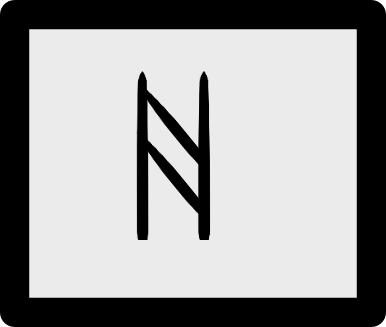
The Hægl (Hagalaz) rune is associated with disruption, external force, and the interruption of established systems within early Germanic societies. Its meaning is grounded in events that occur outside of direct control, altering conditions and requiring response or adaptation.
In historical contexts, Hægl appears within inscriptions as part of a functional writing system, contributing to meaning through its placement within words and phrases rather than acting as an isolated symbol.
Hægl (Hagalaz) in Historical Context
The name of the rune is linked to hail, a natural force capable of sudden and significant impact. In the early medieval world, such events could damage crops, disrupt travel, and alter the stability of daily life.
These occurrences were not abstract or symbolic, but immediate and practical challenges. The Hægl rune reflects this understanding of disruption as something external, capable of interrupting established patterns and requiring resilience and adjustment.
Use in Runic Inscriptions
Hægl appears within runic inscriptions as part of a structured writing system, where its role is determined by its position within names and words. Like other runes, it contributes to meaning through context and sequence rather than functioning independently.
Surviving material suggests that runic writing prioritised clarity and intent, with each character forming part of a deliberate and economical expression.
Hægl (Hagalaz) in Modern Design
When incorporated into engraved rune rings, Hægl reflects disruption and structural change, expressed through clear and deliberate forms. Designs avoid decorative reinterpretation, instead maintaining the directness and intent found in historical material.
Each piece is developed from research into inscriptions and artefacts, then refined into a form suitable for precision engraving and everyday wear.